padel court construction as an engineered system—not a quick installation. In the UAE, heat cycles, humidity, dust,
frequent cleaning, and night usage expose weak workmanship fast. That is why serious owners search for
padel court construction uae, padel court installation UAE, and a proven
padel court contractor Dubai / Abu Dhabi who can deliver stable play, safe enclosure finishing, and predictable maintenance.This guide is written for investors, facility managers, schools, hotels, residential communities, and villa owners who want a clear decision
roadmap—without marketing noise. You will learn how to protect performance using FIP-aligned geometry, base discipline, drainage strategy,
enclosure stability (glass + steel), and a turf system that stays consistent under UAE conditions.
You will also understand padel court construction cost drivers, what “turnkey” should actually include, and how to compare
contractor offers without getting trapped by shortcuts that create downtime later.Almustaqbal Alsarea builds padel as a complete scope: planning, civil works, enclosure, turf, lighting, approvals coordination,
and post-handover support. The advantage is simple—one accountable team and measurable quality control.
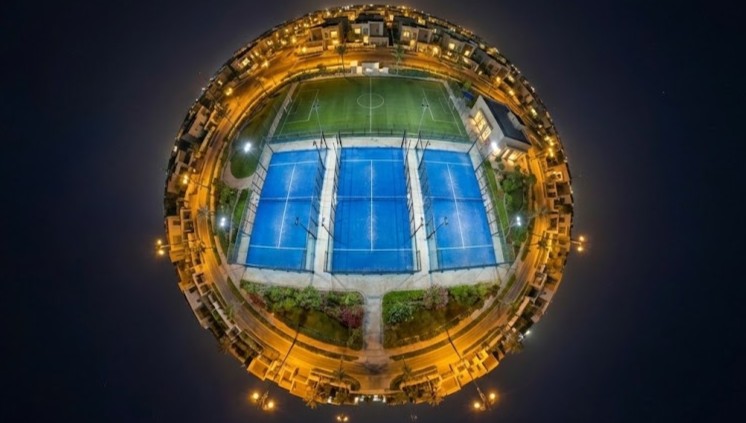
If you are building a compact destination (three padel courts with a small supporting pitch) or a single premium court, the engineering logic stays the same:
build once, build right.
Table of Contents
What “Reference-Grade” Padel Court Construction Looks Like in the UAE
A reference-grade court is not defined by a glossy photo. It is defined by performance outcomes you can feel:
consistent bounce, predictable rebound behavior, confident grip, quiet enclosure stability, and comfortable night visibility.
When those outcomes are engineered into padel court construction, you protect the facility’s reputation and reduce operating headaches.
- Playability: uniform surface response across the court, including corners and high-traffic zones.
- Safety: clean finishing (no sharp edges), stable gates, and reliable enclosure behavior under real impact.
- Durability: corrosion-ready steel strategy, safe glass fixing, and disciplined turf seams that resist early opening.
- Uptime: drainage that prevents puddling after cleaning or rain, reducing slip risk and booking losses.
- Comfort at night: engineered lighting uniformity with glare control so players see the ball clearly.
These points matter because every shortcut shows up later as complaints, repairs, or low repeat bookings.
If the goal is long-term demand, padel court construction must be planned as a full system—from the base to the last lighting adjustment.
FIP Standard Padel Court Dimensions: How to Use the Standard Correctly
Many clients search for FIP standard padel court dimensions because they want a court that “feels correct.”
The standard geometry protects spacing, rebound behavior, and the match experience. For official reference material, consult the
International Padel Federation.
In practice, the smartest UAE projects use FIP alignment as the baseline, then upgrade execution for climate exposure and operational reality.
Core geometry that drives the playing experience
A professional doubles padel court is built around a 20m x 10m playing area, with defined service zones, net positioning,
and enclosure behavior that supports predictable rebounds. Contractors who “copy the look” without respecting measurement discipline risk creating
a court that feels off, even if the enclosure looks premium.
UAE-specific layout decisions that most people forget
- Orientation & sun angle: reduces glare during peak play hours and improves comfort.
- Wind exposure: affects ball behavior and enclosure stability; it also impacts long-term noise and vibration.
- Noise and neighbor comfort: especially important in residential communities and villas.
- Safe circulation: gates, walkways, and access zones should prevent crowding and protect enclosure edges.
If a contractor cannot explain how standards translate into real construction decisions, the project risks becoming a “looks good” court
rather than a “plays right” court. That difference is exactly why clients prefer a builder who verifies measurements and controls quality in every stage.
Base & Civil Works: The Hidden Half of Padel Court Construction
In the UAE, the fastest way to lose money is to focus on visible materials before the base is engineered.
The base is where performance is decided: flatness tolerance, slope logic, drainage behavior, and long-term stability.
Great turf on a weak base still creates complaints. Strong padel court construction starts with civil discipline.
Site evaluation: the checklist that protects budget and timeline
A professional site assessment considers access routes for equipment, staging areas, plot boundaries, power routing, water management,
wind exposure, shading behavior, and neighbor proximity. In residential projects, this is where you prevent future friction:
sound management, privacy considerations, and smooth circulation.
For full scope planning and drainage execution, see Civil Works and Drainage.
Slab accuracy: why “flat enough” is never enough
Slab accuracy is not a minor detail. It is the foundation of reputation. If slab flatness is weak, the surface response becomes inconsistent,
turf stress increases, enclosure alignment becomes harder, and maintenance turns reactive. A serious contractor treats slab tolerance as a measurable deliverable
verified during execution—not assumed at handover.
Drainage behavior: it’s not only about rainfall
Drainage in padel court construction is about what happens after cleaning cycles as much as it is about rain.
If drainage is ignored, puddles form, stains appear, algae grows in shaded zones, and slip risk increases.
Downtime then becomes the hidden cost that damages bookings and reputation.
- Prevents standing water after cleaning or weather events
- Reduces staining and early “old look” appearance
- Improves safety by limiting slippery zones
- Protects long-term base health by preventing trapped moisture
When the base and drainage are executed correctly, everything above becomes easier: turf behaves better, enclosure alignment stays stable,
and the entire court feels professional the moment players step in.
Padel Court Fencing and Post Installation: Enclosure Stability That Feels Premium
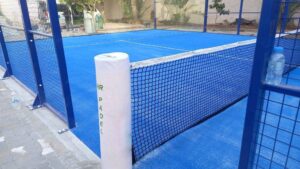
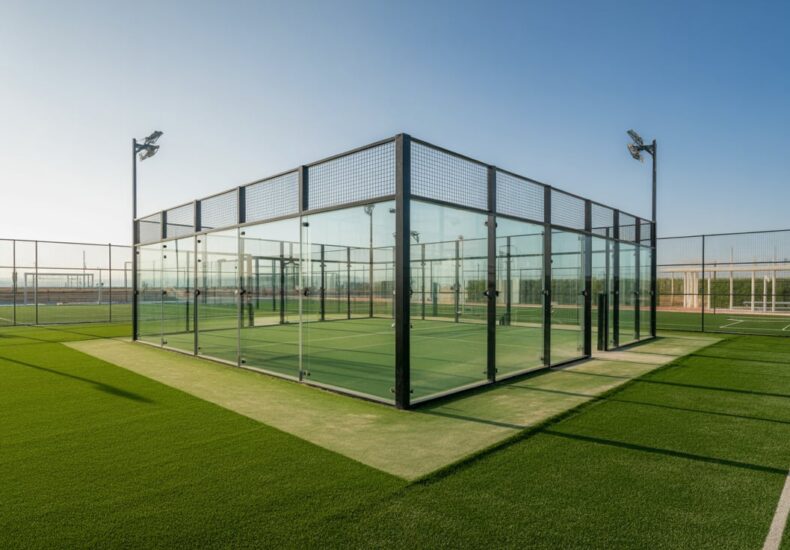
padel court construction
One essential component in padel court construction is padel court fencing installation.
This includes tempered glass, mesh fencing, gates, and structural frames. Proper padel court post installation ensures the enclosure stays stable,
safe, and quiet—because a court can look premium but feel cheap if it vibrates, rattles, or shifts after a few months of real usage.
Padel court glass plus galvanized steel structure: durability under UAE humidity
In coastal and high-humidity zones, corrosion strategy becomes a performance decision. Steel protection and fastener quality determine whether the court stays premium
through heat cycles and humidity. A professional specification covers the protection strategy, coating system, and fixing quality.
To explore structure scope options, see Glass and Steel Structures.
Tempered glass finishing: safety + predictable rebound
Glass is not only a feature—it is a safety and performance layer. Reference-grade execution focuses on stable fixing strategy, clean finishing,
and consistent alignment checks during installation. The goal is predictable rebound behavior and long-term integrity with fewer stress points.
Fencing details that protect safety and reduce maintenance calls
Fencing is not cosmetic. Mesh finishing affects safety, enclosure behavior, and premium perception.
Poor joins and unsafe edges increase risk and increase maintenance requests.
Clean execution supports stability and helps the entire court feel professionally built.
Quality checklist before handover
- Glass alignment and safe finishing (no sharp edges, no weak stress points)
- Gate alignment and smooth access (reduces long-term damage and complaints)
- Mesh joins and edge safety (prevents injury risk and early wear)
- Fixing inspection and vibration control (protects stability and premium feel)
- Final enclosure review for noise and stability under impact
If you are planning a turnkey padel build, explore full padel solutions here:
Padel Court Solutions.
Artificial Turf Padel Court Installation: Performance, Feel, and Long-Term Consistency
Flooring is the layer players interact with, so it becomes the most visible indicator of quality.
In the UAE, dust and repeated cleaning cycles expose weak seams and poor finishing quickly.
That is why Artificial turf padel tennis court installation must be treated as a performance system:
base accuracy, seam discipline, correct infill behavior, and consistent finishing at corners and edges.
Why the base controls the turf result
Turf performance depends heavily on the base. If the base is not accurate, the surface can feel inconsistent,
seams can open earlier, and ball response becomes unpredictable.
A strong build starts with disciplined civil works and drainage planning.
For base and water management scope, review Civil Works and Drainage.
What “premium turf execution” means (beyond the brand name)
The “best turf” is not one product label. The best turf is the system that matches your usage level, maintenance plan,
and facility positioning. High-traffic clubs need seam stability and controlled infill behavior. Residential communities need durability and easy cleaning cycles.
Hotels and schools need safe, predictable feel for mixed skill levels.
For broader surface options and installation scope, explore Sports Flooring Systems and Artificial Turf.
- High-usage clubs: prioritize seam stability, consistent grip, and controlled infill behavior.
- Residential communities: prioritize durability, safety finishing, and low-maintenance cleaning cycles.
- Hotels & schools: prioritize comfort, safety, and predictable play feel for mixed skill levels.
Common turf mistakes that create “hidden” costs
- Weak seam discipline that opens under heat cycles and frequent cleaning
- Inconsistent corner finishing that changes bounce and creates early wear points
- Ignoring dust management and maintenance planning (surface looks old quickly)
- Installing turf before base verification (performance problems locked in)
When padel court construction treats turf as the final performance layer—not the starting point—the court feels professional and stays consistent.
Night Play Lighting: The Difference Between “Bright” and “Bookable”
In the UAE, night play is a major demand driver. Lighting is not decoration—it is a performance feature that directly impacts bookings.
Courts that are bright but uncomfortable lose repeat players and generate negative reviews.
Engineered lighting focuses on uniformity, controlled glare, correct pole positioning, and aiming verification after installation.
For engineered solutions, see Sports Lighting.
What a premium lighting plan must deliver
- Uniform coverage that reduces eye strain during long rallies
- Controlled glare so players track the ball cleanly
- Stable pole placement strategy that supports safety and visibility
- Aiming verification and adjustment after installation
Strong lighting engineering makes the court the preferred option in its area because players feel comfortable and confident.
For operators, this is one of the fastest ways to protect demand and build a premium reputation.
Padel Court Construction Cost in the UAE: What Actually Moves the Price
The padel court construction And Installation cost is controlled by engineering decisions—not a single number.
Two courts can look similar and perform very differently after one UAE summer.
The most accurate way to compare cost is to compare what is included, what is verified, and what is protected.
| Cost Driver | What It Changes | What It Protects Long-Term |
|---|---|---|
| Base & slab accuracy | Flatness, alignment, surface stability | Playability, turf life, enclosure alignment |
| Drainage strategy | Runoff speed after cleaning/rain | Uptime, safety, base health |
| Structure & corrosion system | Steel protection, fasteners, vibration control | Durability, stability, fewer repairs |
| Glass and fixing specification | Stability, safety finishing, rebound behavior | Safety, premium feel, predictable play |
| Turf system execution | Seams, infill behavior, finishing | Consistency, reduced rework, better reviews |
| Lighting engineering | Uniformity, glare control, aiming verification | Night comfort, repeat bookings, reputation |
A practical way to estimate without guessing
Instead of asking “What is the cheapest option?”, ask “What performance level am I building for?” Then match the specification to your model:
residential community, premium club, school, hospitality, or villa.
When your scope is tied to outcomes (playability, safety, uptime), the budget becomes rational and predictable.
Typical timeline logic (sequence matters)
Timeline depends on site readiness and approvals, but the correct sequence stays consistent:
feasibility + layout, civil works + base verification, enclosure structure + glass finishing, turf installation, lighting aiming, then QA and handover.
Rushing accuracy creates issues that cost more than the time saved.
Compliance and Approvals: How to Keep Padel Court Construction on Schedule
Compliance is not a final step—it is a planning discipline. When approvals are considered early, the project timeline becomes predictable.
When they are ignored, delays appear exactly when you want to open and start bookings.
A turnkey builder reduces risk by coordinating engineering, documentation, and execution under one accountable plan.
What “compliance” really means for owners
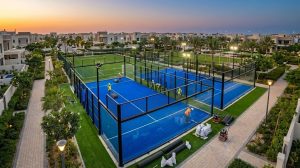
- Correct layout planning with safe circulation and controlled access
- Safe finishing standards on glass, fencing, gates, and edges
- Lighting and electrical planning done properly—not improvised on site
- Clear handover checks that confirm performance before opening
The goal is simple: open confidently, avoid rework, and protect the court’s premium perception from day one.
How to Choose a Padel Court Contractor in Dubai / Abu Dhabi (Without Falling for Cheap Shortcuts)
If you want long-term performance, choose a contractor who can explain the build as a complete system and verify deliverables.
If a quote is cheap because it skips measurable accuracy, it is not cheaper in the long term.
The most reliable decision method is to interview the contractor using performance questions—not brand claims.
Questions that reveal real build quality
- How will base and slab accuracy be measured and documented?
- What is the drainage strategy for cleaning runoff and rainfall?
- What corrosion protection system is specified for structure and fasteners?
- How will enclosure stability be protected from vibration and noise?
- What seam method and finishing approach will be used for the turf?
- How will lighting comfort be verified after aiming and adjustment?
- What acceptance checks are included before handover?
Why turnkey responsibility matters in padel court construction
Padel is built by multiple trades—civil works, steel, glass, turf, lighting—yet the court only performs if those trades are coordinated under one accountable plan.
Almustaqbal Alsarea delivers padel court construction as a turnkey scope to eliminate fragmented responsibility,
prevent scope gaps, and keep quality measurable from planning through handover.
3-Court Residential Model: Why It Wins in the UAE (And How to Build It Without Losing Focus)
The three-court format is popular in UAE communities because it balances capacity and premium perception. It supports simultaneous play, coaching,
and “social padel” activity—while still keeping padel as the main attraction. The success factor is not just the number of courts. It is the execution quality:
stable enclosure, comfortable night lighting, and a surface that stays consistent after heavy usage.
Operational design: how to protect bookings and avoid complaints
- Circulation planning: clear entry and exit flow to prevent congestion at gates.
- Lighting zoning: comfortable coverage that avoids light spill into residential windows.
- Noise planning: stable enclosure and smart layout reduce vibration and perceived noise.
- Maintenance access: planned access points make cleaning and servicing easier and faster.
Simple ROI logic (illustrative, not a promise)
Investors often ask how to think about return. The best approach is to model bookings conservatively and focus on uptime.
A premium build reduces downtime and protects repeat play, which is often more valuable than aggressive pricing.
The table below shows how operators usually structure a simple forecast model.
| Variable | Why It Matters | What Improves It |
|---|---|---|
| Average daily bookable hours | Defines total capacity | Comfortable lighting + community-friendly schedule |
| Utilization rate | Turns capacity into revenue | Premium play feel + strong reviews + reliable operations |
| Downtime | Hidden revenue loss | Drainage discipline + preventive maintenance |
| Repeat bookings | Stabilizes demand | Consistent turf + stable enclosure + glare-free lighting |
The takeaway is clear: the court that stays open, plays right, and feels premium wins.
That is why the smartest budgets prioritize engineering discipline in padel court construction.
Optional Add-Ons (Without Diluting the Padel Focus)
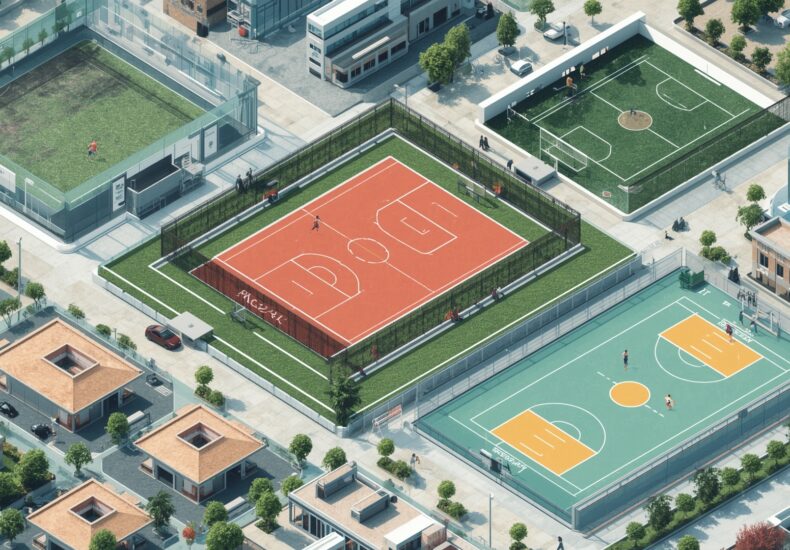
Padel can be the core business driver while other sports act as supporting features. Some UAE sites include a compact pitch for community engagement or an indoor gym court for schools.
The key is zoning: keep padel visually and operationally dominant, and place supporting elements so they do not interfere with padel circulation, lighting, or noise control.
Supporting mini pitch: football field construction as a secondary feature
If the site includes a small supporting pitch, correct planning keeps football as a complementary activity while padel remains the premium focal point.
Professional football field construction still requires base layering, drainage behavior, and safe finishing—especially in high-usage community sites.
For full scope, see Football Field Construction and Multi-Sport Courts.
Indoor multi-sport option: vinyl basketball floor for controlled environments
For schools, gyms, and indoor halls, a vinyl basketball floor can be a strong complement to outdoor padel.
Vinyl supports shock absorption and easy maintenance in multipurpose environments.
If your project includes an indoor hall, explore options at Vinyl Basketball Floor.
The rule remains the same: build padel as the flagship, then add supporting sports only when the plan protects performance and operational flow.
Maintenance Strategy: Keep Your Padel Courts Bookable Year-Round
Maintenance is not an afterthought—it is a business strategy. In the UAE, heat, dust, and humidity accelerate wear if maintenance becomes reactive.
Preventive scheduling reduces downtime, prevents small issues from growing, and keeps the facility visually premium.
Regular padel court construction success depends on what happens after handover: cleaning routines, inspection schedules, and planned adjustments.
What professional maintenance usually includes
- Surface cleaning plan aligned with dust exposure and usage level
- Turf inspection (seams, corners, high-traffic zones) and corrective actions
- Enclosure inspection (fixings, gates, vibration points) and safety finishing checks
- Lighting aiming review and adjustments (comfort and glare control)
- Drainage behavior review after cleaning/rain to prevent puddling and stains
For professional support plans, see Sports Court Maintenance.
A preventive approach protects bookings and reputation—especially for busy three-court facilities.
FAQ: Padel Court Construction in the UAE
What is the smartest first step before building a padel court?
Start with a site assessment and a specification roadmap. In the UAE, the base and drainage plan decide long-term performance,
so layout feasibility and civil discipline should be confirmed before material selection.
Why do two padel courts look similar but play differently?
Because performance is driven by what is hidden: slab accuracy, drainage behavior, enclosure stability, seam discipline, and lighting comfort.
In other words, the system matters more than the surface appearance.
Does padel court construction cost depend more on materials or engineering?
Engineering decisions usually move the price more than one material label. Base tolerance, corrosion strategy, glass fixing specification,
lighting engineering, and the quality verification plan are major cost drivers.
How do I choose the right padel court contractor Dubai / Abu Dhabi?
Choose the team that can explain how it verifies accuracy and controls risk across the entire build: civil works, enclosure, turf, and lighting.
Ask for measurable checks and acceptance criteria, not only marketing claims.
Is Artificial turf padel court installation the best option in the UAE?
It is often the preferred solution when executed correctly because it supports durability and consistent play feel.
The key is base accuracy, seam discipline, and a maintenance plan aligned with dust and cleaning cycles.
Conclusion: Build Once, Build Right—And Keep Padel as the Main Asset
The best UAE courts are built as complete performance systems: base accuracy, drainage behavior, stable enclosure execution,
Artificial turf padel court installation with disciplined finishing, engineered lighting, and a maintenance plan that protects uptime.
When these fundamentals are respected, the court becomes the facility people trust, recommend, and book repeatedly.
If you want a court that plays right and stays premium after real usage, start with a site visit and a measurable specification plan.
Almustaqbal Alsarea padel court manufacturers delivers turnkey padel court construction across Dubai, Abu Dhabi, and the Emirates with one accountable team—so quality stays controlled,
timelines stay predictable, and your facility opens with confidence.
Related posts
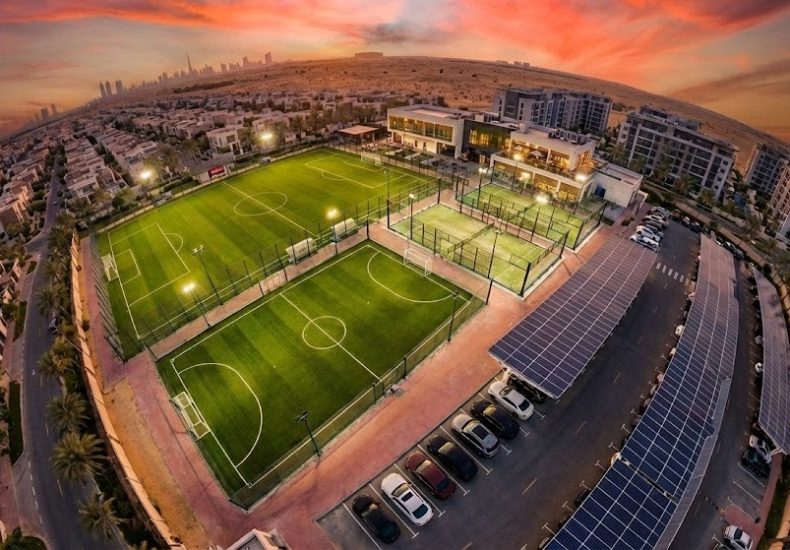
Proven Sports Court Construction UAE: Costs, Specs, Suppliers & Maintenance