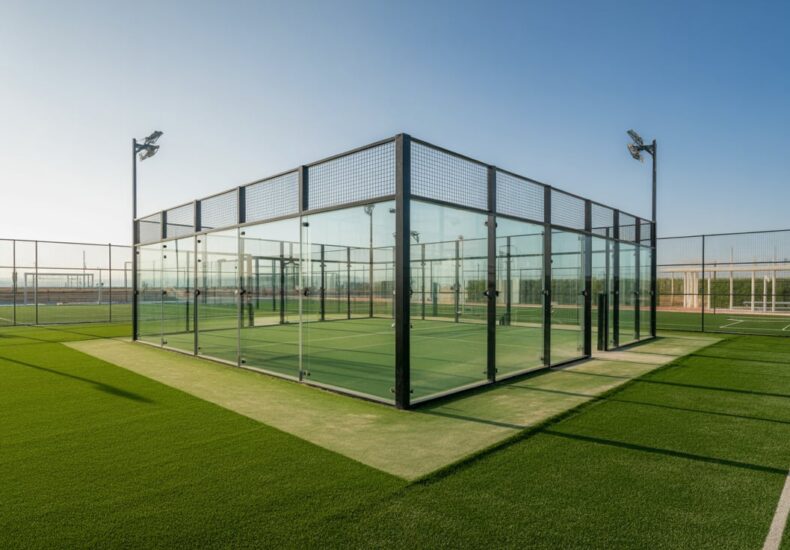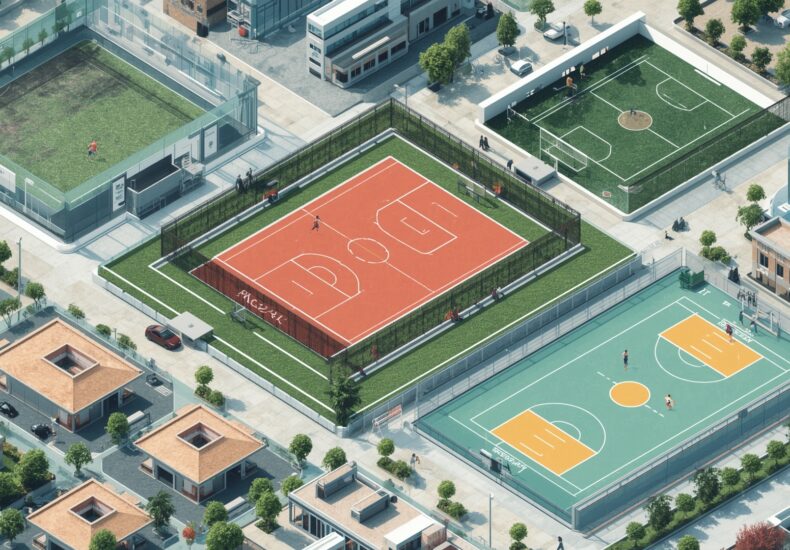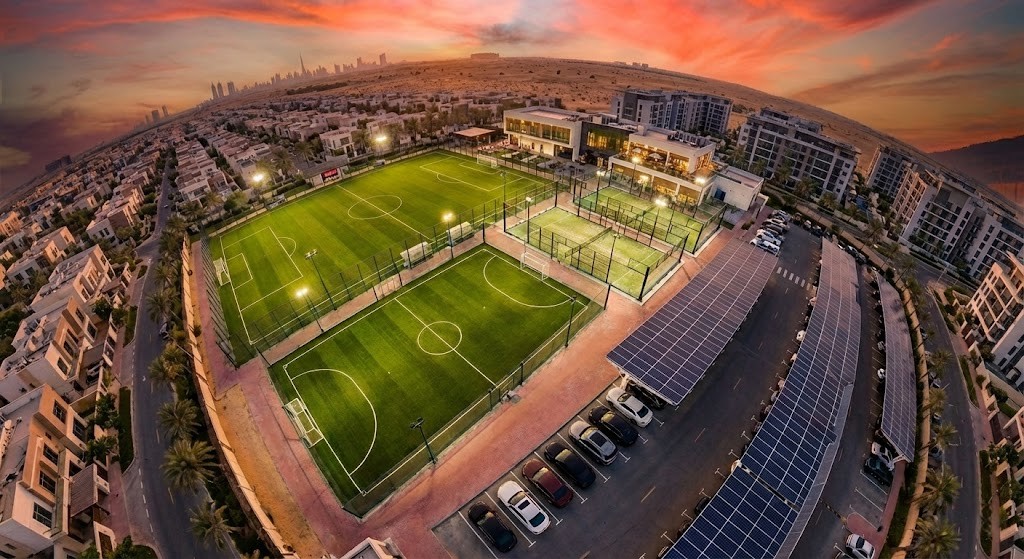
In reality, the winning result depends on what happens under the surface—civil works accuracy, drainage behavior, structural stability, lighting comfort, and disciplined finishing.
In the UAE, the climate adds another layer of pressure: heat cycles, humidity in coastal zones, dust exposure, frequent cleaning, and heavy booking schedules.
That is why serious owners treat sports construction as an engineered system, not a quick installation.
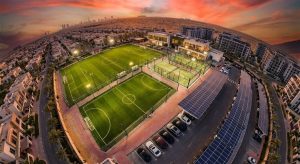
Almustaqbal Alsarea delivers turnkey delivery for clubs, schools, residential communities, hotels, and developers—covering planning, supply, execution, and after-sales support.
This pillar guide is written for decision-makers who want clarity, not noise: how to plan a high-performance facility, how to compare contractors and suppliers,
and how to build courts that stay safe, playable, and profitable in the UAE market.
Ready to build? Start with a technical site visit and a scope that protects performance.
Request a Quote & Site Visit
|
Explore Court Construction & Flooring
1) What “Sports Court Construction UAE” Really Means
In many markets, sports construction is already demanding. In the UAE, it is more demanding because the environment accelerates weak decisions.
A court may look perfect on day one and feel “cheap” after a few months if the base is not flat, drainage is ignored, joints are weak,
or structural fixing methods are rushed. That is why sports court construction UAE should be approached as a long-term performance system.
Owners typically judge a facility by results they can see and measure:
consistent ball bounce, stable footing, safe rebounds, clean aesthetics, low downtime, and predictable maintenance costs.
Those outcomes come from engineering discipline—not slogans.
Whether the project is padel court construction, football field construction, or an indoor hall with a vinyl basketball floor,
the winning formula is the same: accurate civil works, verified finishing, and maintenance-ready delivery.
The UAE market also has a strong commercial reality: competition.
New clubs open frequently, and users quickly compare playability, lighting comfort, surface quality, and overall experience.
A facility that plays right earns repeat bookings, better reviews, and stronger membership retention.
That is why smart investors treat construction decisions as brand decisions.
2) A Practical Roadmap: From Site to Handover
A professional build is not a single activity—it is a controlled sequence.
When clients compare quotes, the smartest comparison is not “price vs price,” but “verification vs verification.”
A proper scope makes each stage measurable, so quality is controlled before problems become visible.
Phase A: Feasibility and Concept Planning
The first phase decides whether the project will succeed commercially and technically.
It includes sport mix selection (padel-only vs multi-sport), site constraints, access flow, parking logic, noise considerations,
and the target user segment. A hotel court design differs from a high-usage club. A school court differs from a developer’s community court.
The design must match the usage model from day one.
Phase B: Engineering Scope and Specifications
This phase defines the real build: civil works tolerances, drainage system design, structural frame specs, corrosion strategy,
lighting targets (uniformity and glare control), surface system selection, and safety finishing details.
If these items are not written clearly, the project becomes vulnerable to shortcuts.
Phase C: Execution, QA, and Handover
Execution is where credibility is built. Quality assurance should include base checks, alignment checks, fixing inspections,
surface finishing review, line marking accuracy, and safe edge detailing.
Handover should include a realistic maintenance plan and clear warranty boundaries that protect the owner.
| Stage | What Happens | What It Protects |
|---|---|---|
| Feasibility | Sport mix, site constraints, user model, access flow | ROI, user experience, future expansion |
| Specification | Base tolerances, drainage, structure, lighting, surfaces | Performance, durability, predictable quality |
| Execution | Civil works + installation + finishing + line marking | Safety, playability, reduced downtime |
| Handover | QA checks, documentation, maintenance plan | Long-term ROI, reputation, warranty clarity |
For turnkey delivery across key sports categories, explore:
Padel Court Services,
Football Fields Services,
and Basketball Court Services.
3) Approvals, Zoning, and Safety Responsibilities
Approvals and compliance should not be treated as a final step. They influence layout, drainage planning, lighting placement, and safety finishing.
When approvals are considered early, the timeline becomes predictable. When approvals are ignored, projects face delays, redesigns, and avoidable cost increases.
A turnkey contractor can reduce risk by coordinating documentation and engineering requirements from day one.
What “Compliance” Means in Real Projects
Compliance is not a single certificate. It is a behavior: correct dimensions for the sport, safe enclosures, stable structures,
appropriate lighting, safe access, and responsible finishing. For sport references, many owners consult federation guidelines as a technical anchor—
for example the International Padel Federation for padel,
FIFA for football principles,
and FIVB for volleyball.
In practice, the build must also match the site and the UAE environment.
Safety is a Business Asset
Safety is not only a legal requirement—it is a commercial asset.
Safe edges, controlled traction, and stable structures reduce injuries, complaints, and downtime.
The facilities that maintain strong booking rates are usually the facilities that feel safe, clean, and consistent under real use.
4) Civil Works, Base Accuracy, and Drainage
The base is where performance begins. Most long-term failures are not caused by surface materials; they are caused by weak base preparation.
If the slab is not flat, you will see inconsistent bounce, accelerated seam stress, pooling water, and misalignment issues.
In sports court construction UAE, base accuracy and drainage behavior are non-negotiable.
Base Accuracy: Why “Looks Level” Is Not Enough
A base can look acceptable and still be wrong for performance. Professional execution focuses on verified tolerances, stable compaction,
correct slope behavior (when needed), and controlled transitions around perimeter details.
When these are respected, surfaces last longer, joints stay stable, and the court “feels premium.”
Drainage: Protecting Uptime
Drainage is often misunderstood. Even if a court is not exposed to heavy rain, cleaning cycles and water runoff still matter.
Poor runoff behavior causes puddles, staining, slip risk, and downtime. For football and turf-heavy facilities, drainage is a core performance feature.
In padel, drainage affects cleanliness and long-term base health—especially in outdoor installations.
5) Padel Court Construction: The UAE Standard
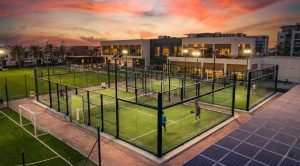
Padel court construction has become one of the most requested projects across Dubai and the Emirates because padel fits the lifestyle and the business model:
strong night-play demand, compact footprint, and excellent revenue potential when the experience is premium.
The problem is that padel courts are also one of the easiest projects to do “almost right.”
A court can look premium but feel wrong if the enclosure vibrates, the turf seams open, or lighting causes discomfort.
What Defines a Professional Padel Build
A professional padel build is the combination of accurate civil works, a stable enclosure, safe glass finishing, a reliable turf system,
and lighting designed for comfort. When these components are built as one system, the court becomes a premium product—not just a structure.
Enclosure Stability: Glass, Mesh, and Structural Frame
A stable enclosure is felt immediately by players. It should not rattle, vibrate, or shift after a few months.
Stability comes from alignment discipline, correct fixing methods, and a corrosion strategy suitable for UAE humidity and coastal exposure.
If you are planning a turnkey padel project, explore:
Padel Court Construction
and Padel Court Services.
Artificial Turf Padel Court Installation: Performance System, Not a Roll-Out
Artificial turf padel court installation is where many “cheap-looking” outcomes are created—because weak seam discipline and poor finishing show quickly.
In the UAE, dust and frequent cleaning cycles will expose weak corners, lifting edges, and uneven infill behavior.
A strong installation includes a verified base, disciplined seams, controlled infill distribution, and clean edge transitions.
Why Padel Becomes a “Destination” When Done Right
High-performing padel facilities are designed as destinations: comfortable lighting, premium finishing, clear access flow, and maintenance planning.
When the experience is consistent, users return. When the experience feels unstable or uncomfortable, users compare alternatives quickly.
That is why padel is not only a sport decision—it is a brand decision.
6) Padel Court Construction Cost: How to Estimate Without Guessing
The phrase padel court construction cost is searched daily because investors want clarity.
The challenge is that cost is not one number. It depends on engineering choices and scope completeness.
A quote can look attractive while hiding weak base preparation, low-grade fixing systems, or lighting shortcuts.
A correct estimate starts by defining what is included and what is verified.
Cost Drivers That Actually Change Long-Term Value
| Cost Driver | What It Changes | Why It Matters in the UAE |
|---|---|---|
| Civil works & slab accuracy | Flatness, alignment, stability | Protects turf life, bounce consistency, and enclosure alignment |
| Drainage behavior | Runoff speed, uptime | Reduces downtime, puddling, staining, and safety risk |
| Structure & corrosion strategy | Steel protection, vibration control | Heat cycles and humidity punish weak fixing and protection |
| Turf system + installation discipline | Grip, seams, infill behavior | Dust and cleaning cycles expose weak seams quickly |
| Lighting engineering | Uniformity, glare control | Comfort drives repeat bookings and premium perception |
How to Compare Quotes Like an Operator
A professional comparison uses a checklist:
what is measured, what is guaranteed, and what is excluded. Ask contractors to define base checks, enclosure fixing methods,
turf seam process, lighting targets, and handover maintenance guidance.
If the answers are vague, the “low price” often becomes a high long-term cost.
For a padel-focused roadmap and turnkey execution, visit:
Padel Court Construction.
For broader surface and system context, see:
From Padel Courts to Vinyl Basketball Floors.
7) Football Field Construction: Performance, Drainage, and Durability
Football field construction in the UAE is a performance engineering project.
The field must stay playable through heat cycles, frequent use, and ongoing maintenance.
Many owners focus on turf selection only, but the real performance depends on base layering, compaction, drainage behavior, and installation discipline.
What a Professional Football Build Includes
A strong football scope typically includes: site evaluation, excavation (if needed), sub-base and base layers,
drainage elements, leveling, turf installation, infill distribution, seam strength, line marking accuracy, and safe perimeter finishing.
When any of these stages are rushed, the field can develop soft zones, uneven roll, and higher maintenance costs.
Drainage and Base Layering: The Uptime Guarantee
Drainage is the silent difference between a field that stays open and a field that loses bookings.
Poor water behavior leads to pooling, infill movement, and accelerated wear.
A disciplined base and drainage design protect both performance and long-term budgeting.
For turnkey football projects, explore:
Football Fields Services.
If you are building a multi-sport facility where padel is the core business driver, football can be planned as a complementary feature,
but zoning and access flow must prevent conflicts between sports.
8) Indoor Courts: Vinyl Basketball Floor and Multi-Sport Halls
Indoor facilities are judged by comfort and consistency: ball response, traction, shock absorption, and maintenance ease.
For schools, gyms, and multi-sport halls, vinyl basketball floor systems are commonly selected because they combine controlled grip,
manageable cleaning, and performance stability for repeated usage. The result depends on the installation method and subfloor accuracy.
Where Vinyl Wins
Vinyl systems are especially effective when a hall is used for basketball, volleyball, fitness activities, and school events.
The key is to match the system to traffic level and maintenance capability.
A “cheap” indoor floor can become slippery, noisy, or visually degraded quickly under heavy activity and cleaning.
Subfloor Accuracy is the Hidden Factor
Indoor flooring is only as good as the base below it.
If the slab is uneven or movement-prone, joints may open and performance may feel inconsistent.
Professional delivery includes leveling, correct adhesives or fixing methods, clean transitions, and an after-installation care plan.
For basketball court systems and indoor flooring scope, visit:
Basketball Court Services.
For broader construction and flooring context, see:
Sports Court Construction & Flooring.
9) Surface Systems: Turf, Rubber, EPDM & Acrylic
Choosing the correct surface is not about trends. It is about usage, safety, environment, and maintenance reality.
In the UAE, surfaces must handle heat, dust, repeated cleaning, and heavy traffic without losing traction or appearance.
The right surface decision reduces injuries, downtime, and lifecycle costs.
A) Turf Systems (Padel, Football, Multi-Use)
Turf systems dominate many outdoor facilities because they can deliver durable play feel when base accuracy and seam discipline are respected.
In padel, Artificial turf padel court installation must be treated as a premium finishing system: stable seams, clean corners, controlled infill,
and consistent performance under maintenance cycles.
In football, turf performance depends on drainage and base layering as much as it depends on the turf itself.
B) Rubber Systems (Gym, Schools, Multi-Activity Zones)
Rubber flooring is chosen for safety, comfort, and shock absorption.
It is common in gyms, training zones, functional fitness areas, and school activity spaces.
In high-traffic environments, installation quality matters as much as material quality: bonding, seam treatment, and edge finishing protect durability.
A correctly installed rubber system reduces injury risk and improves the user experience under daily use.
C) EPDM Systems (Outdoor Safety Surfaces and Activity Areas)
EPDM is frequently selected for outdoor safety surfaces, running tracks, and play areas where shock absorption and durability are required.
The best results depend on correct base preparation, controlled thickness, proper binder ratios, and disciplined finishing.
In the UAE climate, EPDM performance improves when the system is planned for heat exposure and cleaning behavior from day one.
D) Acrylic Systems (Outdoor Courts and School Play Areas)
Acrylic systems are widely used for outdoor basketball and multi-purpose courts.
They can provide good traction and visual customization, but they require disciplined base preparation.
If the base is weak, cracks and peeling can appear earlier than expected, reducing both playability and visual value.
Quick Comparison: What Fits Which Facility?
| System | Best For | Strength | What Must Be Done Right |
|---|---|---|---|
| Turf | Padel, football, multi-activity outdoor | Durability + strong play feel | Base accuracy, seams, infill control, drainage |
| Rubber | Gyms, schools, training zones | Shock absorption + safety | Bonding, seams, edge finishing, flatness |
| EPDM | Outdoor safety areas, tracks, activity zones | Durable cushioning | Correct binder ratios, thickness control, base prep |
| Acrylic | Outdoor courts, schools | UV-ready finish + color options | Base discipline, crack control, finishing layers |
| Vinyl | Indoor basketball & multi-sport halls | Comfort + controlled traction | Subfloor leveling, installation method, maintenance plan |
The best decision is always the decision that matches your usage level, your maintenance capacity, and your facility positioning.
A premium club surface is different from a school surface—not because one is “better,” but because each serves a different operational reality.
10) Lighting, Accessories, and Player Comfort
Lighting is not just visibility. It directly affects comfort, perception, and booking behavior.
In the UAE, night play is a major driver for padel and football, so lighting becomes a core part of the business model.
The best outcomes focus on uniformity, glare control, correct aiming, and correct pole placement to protect safety and viewing comfort.
Why “Bright” Is Not the Same as “Comfortable”
Players do not remember lux numbers. They remember whether the court feels comfortable.
Poor glare control causes fatigue and reduces the premium feel.
Good lighting supports longer sessions, better user reviews, and stronger retention—especially in facilities that compete on experience.
Accessories that Add Real Value
Accessories can strengthen the facility identity and improve user experience: benches, shaded waiting zones, scoreboards,
ball management systems, safe access gates, signage, and controlled entry flows.
The most profitable facilities are usually the ones that feel organized, premium, and user-friendly from arrival to exit.
11) Maintenance That Protects ROI (and Reputation)
Maintenance is not an afterthought. It is part of the construction strategy.
Facilities with planned maintenance stay premium longer, reduce downtime, and avoid small issues turning into expensive repairs.
In the UAE, preventive maintenance is especially important because dust, heat, and humidity accelerate wear when maintenance is reactive.
Maintenance is the Bridge Between “New” and “Trusted”
A new facility earns attention. A well-maintained facility earns loyalty.
Users quickly notice surface wear, unstable edges, weak seams, and inconsistent play feel.
The facilities that stay consistently booked are usually the ones that stay consistently maintained.
Practical Maintenance Schedule (Simple and Effective)
| Frequency | What to Do | Why It Matters |
|---|---|---|
| Daily / After peak use | Remove debris, basic cleaning, quick safety scan | Prevents dust stress and reduces slip risk |
| Weekly | Inspect seams, edges, gates, high-traffic zones | Stops small issues before they grow |
| Monthly | Deep cleaning, infill review (turf), lighting check | Protects play feel, appearance, and comfort |
| Quarterly | Detailed inspection, minor repairs, documentation update | Extends surface life and protects ROI |
Maintenance also creates trust. When users see consistent quality, they recommend the facility.
Strong recommendations lead to stronger occupancy, stronger revenue stability, and a stronger brand position in a competitive market.
For broader planning and business strategy around sports facilities, explore:
How to Build a Profitable Sports Facility.
12) How to Choose Sports Courts Suppliers in the UAE
Many clients search for sports courts suppliers in the UAE and assume the supplier decision is purely about product quality.
In reality, suppliers and contractors must be evaluated as performance partners.
The court’s real quality is the combination of product choice and installation discipline.
A great product can still fail with weak execution, and an average product can perform better when installed correctly.
The Supplier Checklist That Protects Your Project
- Clear scope: exactly what is included, what is excluded, and what is verified.
- Installation method: how seams, edges, corners, and transitions are executed and controlled.
- Base requirements: what tolerances are required and how they are checked.
- Climate readiness: how the system performs under heat cycles, dust, and cleaning frequency.
- After-sales support: who responds, how maintenance is planned, and how downtime is reduced.
- Documentation: handover clarity, maintenance guidance, and realistic warranty boundaries.
Why Turnkey Responsibility Matters
Projects become risky when responsibility is fragmented: one party for civil works, one for structure, one for lighting, one for turf.
When something fails, each party points elsewhere. Turnkey delivery reduces that risk because one team owns the full system and can control interfaces.
That is a major reason clients choose turnkey execution for sports court construction UAE projects.
Start with a site visit, a measured plan, and a clear specification roadmap.Contact Almustaqbal Alsarea
13) FAQ: UAE Court Construction Questions
Q1) What is the biggest mistake in sports court construction UAE projects?
The biggest mistake is treating the surface as the main decision and ignoring the base system.
Weak base preparation causes uneven play, seam stress, drainage problems, and early wear—even when premium materials are used.
Q2) Why does padel court construction quality vary so much?
Because many projects focus on appearance rather than stability and performance.
Enclosure stability, safe finishing, turf installation discipline, and lighting comfort are the real differentiators.
Q3) How can I estimate padel court construction cost realistically?
Define the scope, then compare what each contractor verifies.
The strongest estimates account for civil works accuracy, drainage behavior, structure stability, lighting targets, and turf finishing—not only materials.
Q4) What makes football field construction durable in the UAE?
A disciplined base system, drainage behavior, correct turf installation, and a maintenance plan matched to usage.
Durability is a system outcome, not a single product feature.
Q5) When is a vinyl basketball floor the right choice?
When the facility is indoor and needs controlled traction, consistent ball response, and manageable maintenance.
Vinyl is especially effective for multi-sport halls that host basketball, volleyball, and school activities.
Q6) How many courts should a padel club build to be competitive?
The answer depends on land, demand, parking, and your booking model.
Many successful clubs scale from a small set of courts to a larger destination over time, but only when the initial build quality protects reputation.
Q7) What should I ask sports courts suppliers in the UAE before buying?
Ask for the full system scope: base requirements, installation method, climate readiness, after-sales support, and maintenance guidance.
Product-only decisions often create performance gaps later.
Q8) How do I protect my court from downtime?
Prioritize base accuracy, drainage behavior, safe finishing, and preventive maintenance.
Downtime usually comes from small issues that were not controlled early.
Q9) What makes a sports facility “premium” to users?
Comfort, consistency, safety, and cleanliness.
Users feel premium quality through stable surfaces, comfortable lighting, safe edges, and organized facilities—not through marketing words.
Q10) What is the fastest way to avoid expensive rework later?
Use a clear specification roadmap and insist on measurable verification during execution.
The courts that rank as “best” in the market are usually the courts that were built as complete systems, not rushed installations.
Sports Court Construction UAE: The Engineering System That Protects Performance
In the UAE, sports court construction UAE cannot be treated as a “surface-only” job. The true difference between a court that looks good and a court that plays right
is the complete system behind it: base accuracy, drainage behavior, structural stability, lighting comfort, and finishing discipline. This is why professional sports court construction UAE
starts with measurable engineering—so the court stays safe, consistent, and premium after real use in heat, humidity, and dust.
At Almustaqbal Alsarea, we build courts as performance assets. Whether your project is padel court construction for a club,
football field construction for a school, or a multi-sport facility that requires indoor solutions like vinyl basketball floor,
the core methodology remains the same: verify the base, control moisture, install to specification, and hand over with maintenance-ready standards.
What “Correct Build” Means in Sports Court Construction UAE
Serious clients in sports court construction UAE evaluate contractors by what they verify—not what they claim. A reliable scope should include:
base tolerances, drainage routing, enclosure stability, line accuracy, and documented quality checks. When these are planned from day one, the result is predictable:
fewer repairs, higher player satisfaction, and stronger long-term ROI.
| System Layer | What Must Be Verified | Why It Matters in UAE Conditions |
|---|---|---|
| Sub-base & leveling | Compaction, flatness, slope logic, expansion behavior | Prevents early cracks, uneven bounce, and surface stress under heat cycles |
| Drainage & moisture control | Runoff path, fall direction, edge detailing, water exit points | Reduces downtime, slip risk, and long-term base damage after cleaning or rain |
| Surface installation | Seams, bonding/fixing method, edge finishing, safe transitions | Protects traction and appearance against dust, frequent cleaning, and heavy bookings |
| Structures & enclosures | Alignment, vibration control, corrosion strategy, safe finishing | Critical for padel court construction stability and long-term safety |
| Lighting comfort | Uniformity, glare control, aiming, pole placement | Key driver for night play and repeat bookings across UAE facilities |
Padel Court Construction: The UAE Standard Clients Actually Need
Demand for padel court construction in the UAE continues to grow because padel works perfectly for community living and night play.
But performance depends on enclosure stability, glass safety, turf behavior, and lighting comfort—not only the court’s visual design.
If your goal is premium bookings, your build must feel stable, quiet, and consistent under constant play.
Football Field Construction: A Pitch That Holds Up After Real Use
Professional football field construction is not only about turf selection—it is about water behavior, shock response, and stability after repeated weekly usage.
In the UAE, strong drainage planning and disciplined base layering protect play quality and reduce maintenance costs over time.
A high-performing pitch is the product of correct engineering and consistent finishing—not shortcuts.
Indoor Performance: Vinyl Basketball Floor as a Multi-Sport Asset
Many facilities choose vinyl basketball floor systems because they offer shock absorption, stable traction, and predictable ball response
for indoor environments. When installed on a correctly prepared base, vinyl supports high-frequency usage in schools, gyms, and community halls—especially when basketball shares time with
volleyball and general training sessions. A strong indoor build focuses on leveling accuracy, joint stability, and long-term surface behavior.
Why Sports Courts Suppliers in the UAE Should Be Evaluated Like Engineers
Selecting among sports courts suppliers in the UAE should not be based on price alone. The smarter approach is to compare the system:
base specification, drainage logic, material certification, installation method, and maintenance support.
When one accountable contractor delivers end-to-end execution, the project timeline becomes predictable and the quality remains measurable—
which is exactly what investors and facility managers need in competitive UAE markets.
When the system is engineered and verified, sports court construction UAE becomes a long-term asset: safer play, stronger reviews,
higher repeat bookings, and a facility reputation that holds up in the market.
14) Conclusion: Build Once, Build Right
The best sports court construction UAE projects share the same foundation: disciplined civil works, stable structures, safe finishing,
engineered lighting, and maintenance-ready planning. Whether your priority is padel court construction, football field construction,
or a multi-sport facility that includes a vinyl basketball floor, the long-term winner is always the system that performs under real usage.
Almustaqbal Alsarea delivers turnkey execution that keeps responsibility clear and quality measurable—from planning to handover and after-sales support.
If you want a facility that plays right, stays safe, and keeps its premium value in the UAE climate, start with a technical site assessment and a scope built around performance.
Request a Quote & Site Visit
Explore related guides:
Related posts
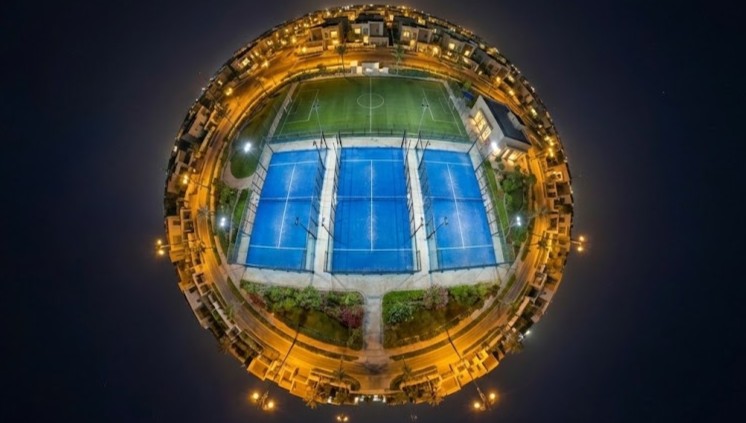
The Ultimate UAE Guide to Padel Court Construction Costs, Official Dimensions, Premium Turf & Full Compliance